Process and Task Model
WFM execution in tSM is process-driven. The scheduler does not operate on isolated tickets; it schedules workforce tasks generated and governed by BPMN processes.
1. Business Meaning
The process layer is used to:
- transform a business work requirement into executable task sequence,
- model serial/parallel realization steps,
- coordinate timers, messages, escalations, and notifications,
- keep execution logic configurable without code changes.
WFM task is a specialized BPMN user task type where assignment is schedule-optimized to concrete time and resource.
2. Process Definition (BPMN/DMN)
tSM uses Camunda-based process engine for WFM orchestration.
Core modeling capabilities:
- BPMN workflow modeling,
- DMN decision modeling,
- process variables and expression evaluation,
- timers and event handling,
- reusable process templates.
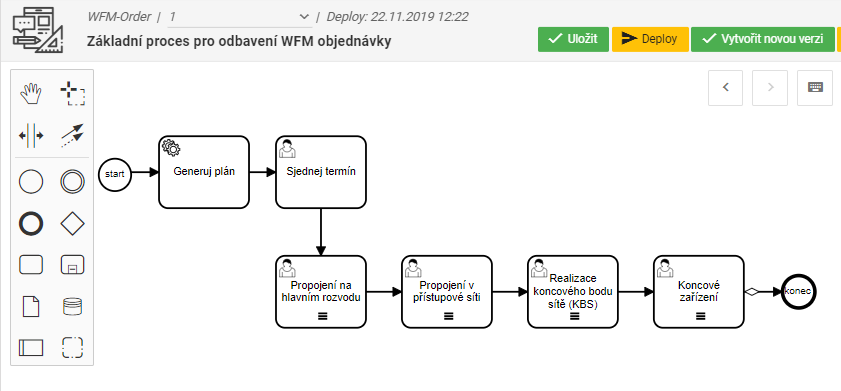
Example process flow for workforce realization:
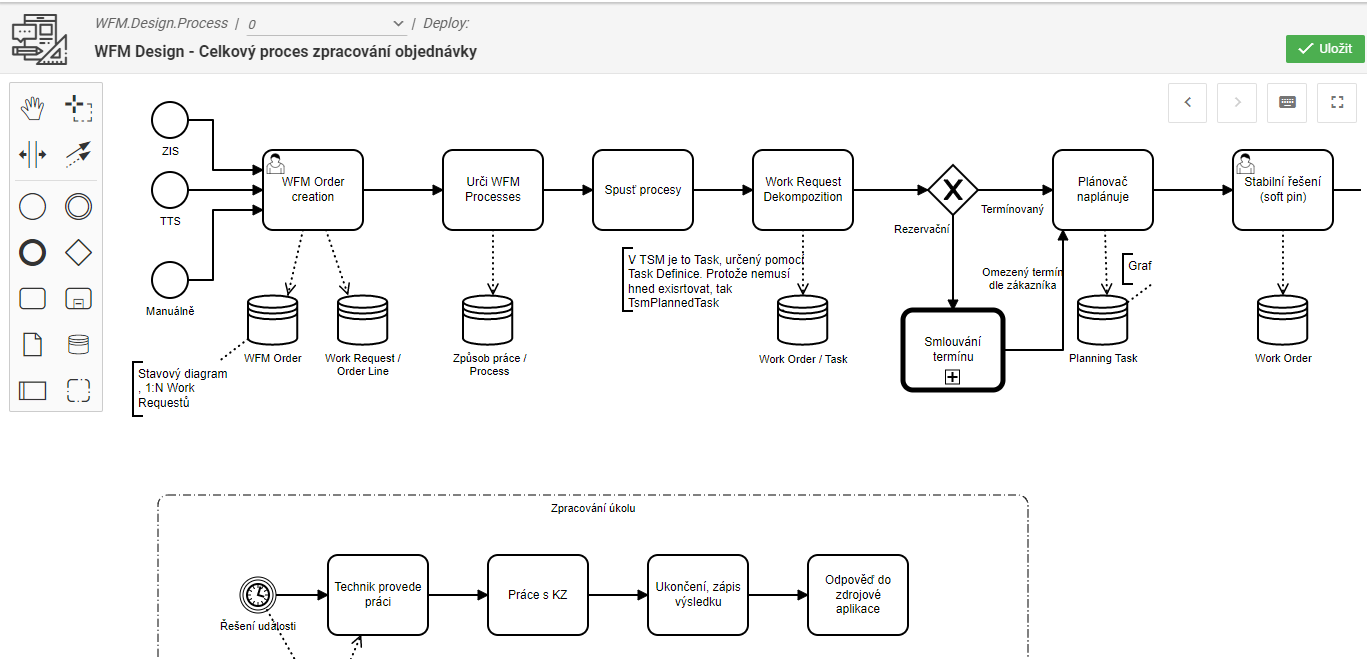
Process modeling and analysis view:
2.1 Typical Execution Pattern
- Source module creates workforce order.
- Process selection logic picks one or more process definitions.
- Process instance creates workforce tasks.
- Scheduler assigns tasks to resources/time slots.
- Task completion events drive subsequent process steps.
3. Task Definition Catalog
Task definitions are reusable templates referenced by process models.
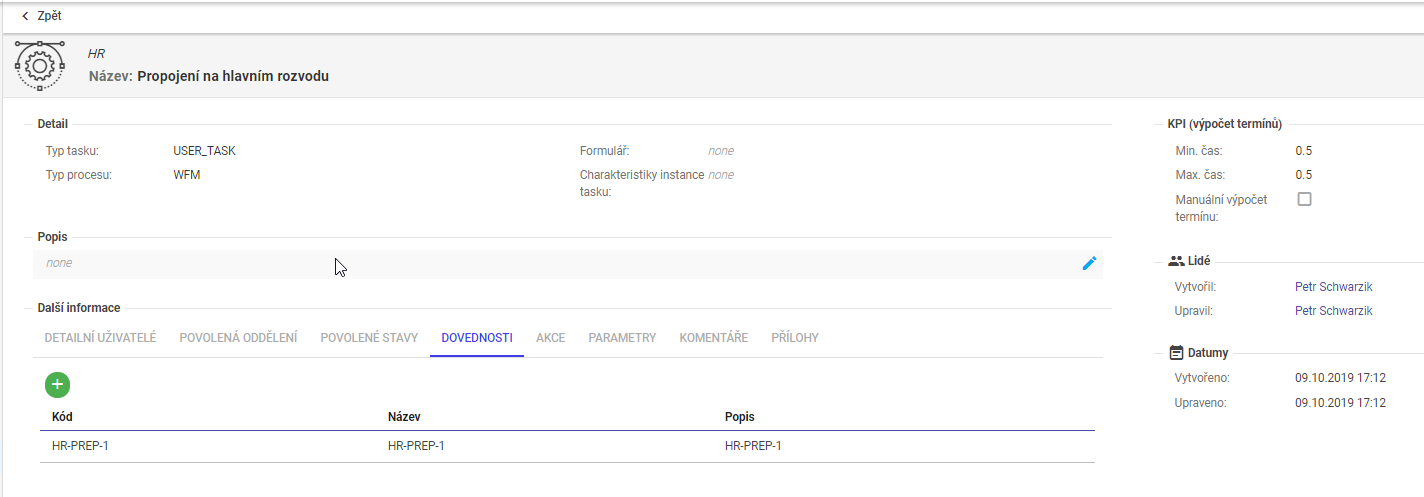
Task template usually defines:
- description/instructions,
- required skills,
- planned duration,
- optional expressions resolving values from order context.
Task definition configuration example:
3.1 Constant vs Expression-driven Attributes
| Mode | Example | Usage |
|---|---|---|
| Constant | fixed duration = 120 min | Stable operational task |
| Expression | duration from order parameters | Variable work complexity |
| Hybrid | base duration + modifiers | Controlled flexibility |
4. Workforce Task Sets and Sequencing
WFM processes often model multi-step implementation packages.
Example package pattern (from source material):
HRMDF wiring,PPSswitchboard work,PRIVlast-mile connection,KBSendpoint/network termination,KZCPE installation.
Such sets can contain serial dependencies, optional branches, and synchronization points.
5. Process and Scheduler Boundary
- process engine decides logical execution order and state transitions,
- scheduler decides concrete assignment by resource/time/route constraints,
- dispatcher may override or pin decisions when needed.
This separation keeps workflow semantics stable while allowing continuous planning optimization.
6. Practical Governance
- keep process definitions small and composable,
- standardize reusable task templates,
- prefer configuration tables/forms over hardcoded logic,
- version process definitions and activate with explicit lifecycle control,
- test process and scheduling constraints together before production rollout.